Your garage holds the bikes, the tools, and probably a door straight into your kitchen. So how do you secure a garage door? Start with the door that leads into your house. Then protect the emergency release, find out what code type your opener uses, and stop leaving the remote clipped to the car visor. None of it takes long, and most of it you can do this weekend.
Key Takeaways
- The door from your garage into the house matters more than the big overhead door, because once someone is in the garage, it is the only barrier left.
- Shield the emergency release, or tie it the safe way, so it still works from inside.
- Opener code type, not home age, decides how exposed you are to code attacks.
- Keep remotes out of vehicles.
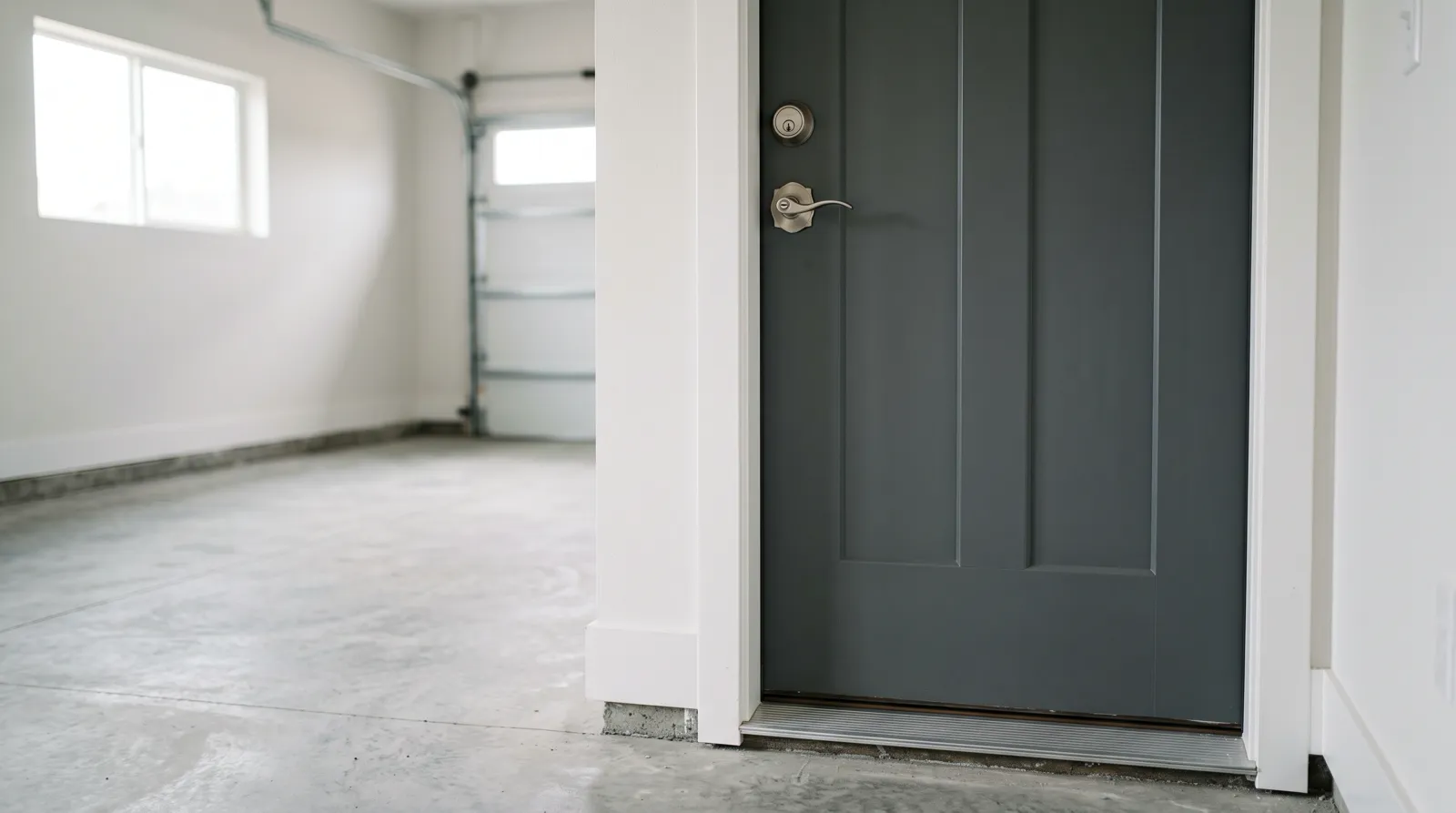
In many homes, the overhead door isn't the easiest way in. The door between the garage and the house often is. Once someone is inside a closed garage, that one entry door is all that stands between them and your living space, and it often gets the least attention.
Think about how a new house gets built. In newer builds, the garage-to-house door can be a basic unit with a builder-grade deadbolt, and nobody revisits it after move-in. Homeowners rekey the front door, then forget this one. We covered that gap in our Smyrna move-in locksmith checklist, where the garage-to-house door is on the list of doors people skip.
Home age doesn't tell you how exposed your opener is. A new house can still have an older-style unit, and an older house may have been upgraded. Code type is what matters, and we cover it below. The big door and its remote get plenty of attention from security articles, but the interior door, the side service door, and the emergency release deserve the same care. We treat them as one system.
The 5-Point Garage Entry Check is a short walk-through of every way into your garage and from your garage into your house. We built it so you can run it in about fifteen minutes with a screwdriver and a flashlight. Each point catches a different weak spot.
What is the 5-Point Garage Entry Check? It is a five-step review of the interior entry door, the emergency release, the opener's age and code type, the remotes and keypad, and the side door and windows. Together they cover the common ways into a garage.
You'll spot most problems at points 1 and 2. Points 3 and 4 are about habits and old equipment. Point 5 is the one people forget until a neighbor mentions it.
Use a keyed deadbolt on a solid-core or steel door, reinforce the strike plate with long screws, and key the lock to match your other exterior doors. Treat this door like a front door, because the overhead door isn't meant to be your last line.
Here is what we'd check on your interior entry door, in order:
A second point on keys: many people leave the garage-to-house door unlocked because they use it all day. That's understandable. Try a keypad or smart deadbolt so the door locks behind you without a key hunt. If you want help picking a lock style for the front, our guide to the best locks for your front door covers the options.
The same rules apply. A side service door that opens straight into the garage should have a deadbolt, a reinforced strike, and ideally no big window beside the handle. Privacy film blocks sight lines into the garage, but it won't stop someone who breaks the glass and reaches the thumb-turn. If glass sits within arm's reach of the thumb-turn, the safer fix is a solid door panel or a glass-break-resistant security film. Skip any lock that needs a key to open from inside, because an exit door generally has to open quickly in an emergency. A locksmith can walk you through options that meet local egress and fire code.
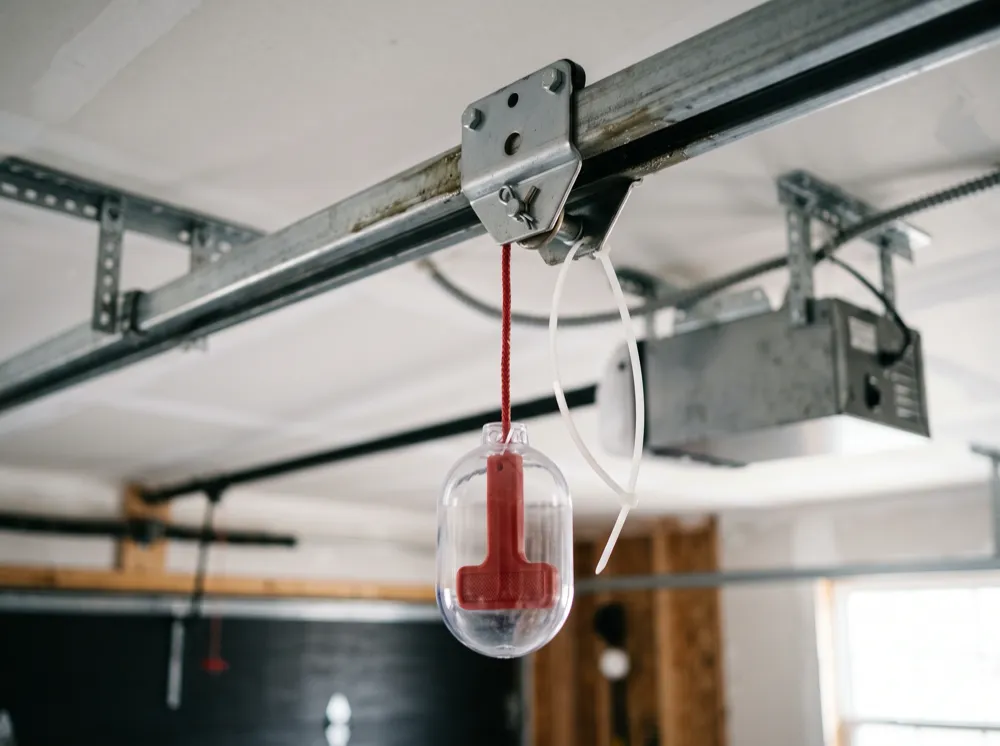
On some older openers, a coat hanger can work. If the emergency release cord hangs near a gap at the top of the door, a bent wire can sometimes hook it from outside and pull it. How exposed you are depends on how your release is positioned and whether it is shielded or removed from easy reach, so it is worth a look at yours.
You have two practical fixes.
Now the safety part, and we mean it. The release exists so people can get out when the power fails or the opener jams. A permanent fastener, a thick tie, or wire can leave you stuck with a door that won't open during a power outage or an opener failure, which is exactly when the release is meant to work, as Chamberlain's support guidance explains. If you use a tie, make it a light one you can break by hand from inside. Never disable the release for good.
Our advice: if your release is exposed and your opener is old, a shield beats a tie. A tie is a decent stopgap this afternoon.
Modern rolling-code openers resist simple replay attacks, while older fixed-code units do not. A rolling-code remote sends a different code each time, so a copied signal is useless on the next press. A fixed-code remote sends the same code every time.
You'll see scary stories about pocket-sized radio gadgets and "code grabbers." Code type is the best predictor of exposure, and age is a useful clue to it. Here's a general guide, not a ranking of products:
| Opener type | Typical exposure | What to do |
|---|---|---|
| Older fixed-code unit | Same code every press, so a copied signal can replay | Replace the opener or its receiver; treat the garage as unlocked until then |
| Early rolling code | Harder to copy, but older designs may have known weak points | Check the label for age; consider an upgrade if it's well over a decade old |
| Current rolling code | Resists simple replay; the release still needs its own protection | Keep remotes out of cars; reset memory if one goes missing |
| Smart opener | Adds phone control and activity logs | Use a strong account password; remove old users and remotes |
Not sure which one you have? Look at the label on the motor unit, or the model number, and search it. If you can't tell, a locksmith or garage door tech can read it in seconds.
One habit matters for every type. If a remote is lost or stolen, reset the opener's memory so it ignores all old remotes, then reprogram the ones you still use. Your manual shows the steps, and it usually takes a few minutes.
The easiest wins are habits, not hardware. Keep the overhead door closed when you're not using it, keep remotes on a keychain instead of the car visor, and add light near the garage and driveway. Delaware State Police burglary-prevention guidance says to keep your garage door closed and locked, and to leave lights on or use timers when you are out.
Armed Forces Insurance (AFI) makes a similar point in its garage door security tips: a thief who breaks into your car and takes the remote has a way into your home, and the door between the garage and house deserves a deadbolt. Both are easy to act on this week:
You may also run across slide locks and floor-mounted door defenders. They can help on track-style doors that rely on a manual lock. Disengage or unplug the opener (or put it in its lock or vacation mode) before you set any manual lock, and never run the opener with a slide lock engaged, because that can damage the door or the opener. On a typical sectional door with an opener they're a secondary step, so we'd handle the five points first.
Want an easy test? Stand in the driveway at night and look at the garage like a stranger would. What can you see through the windows? Where is it dark? Fix the first thing that bothers you.
Call a locksmith for the work that depends on the lock itself: the interior entry door deadbolt, rekeying the garage entry lock, side door hardware, and keypad or smart lock installs. You can handle shields, remotes, and lighting on your own. Hardware that fails under force is worth doing right once.
Before you book anyone, ask what the visit covers. A trustworthy company confirms the scope of work in writing or by text before a technician is sent, and explains any change before touching a tool. That's how we work, and it's a fair standard for any company you call.
If you're in Smyrna or elsewhere in northern Kent County, we cover the area as part of our Smyrna, DE service area. Our residential locksmith services include deadbolts, rekeying, and lock repair, and you can request a garage entry door check to describe what you've got. A photo of the entry door and strike plate is enough to start.
Knowing how to secure a garage door comes down to doing a few things in the right order. The first step is the door between your garage and your house: confirm it's solid, deadbolted, and keyed like your front door. After that, the release, the remotes, and the lighting are quick fixes you can finish in a weekend.
Lock and reinforce the door from the garage into the house first. Then shield the emergency release, keep remotes out of your car, and check your opener's age and code type. Those four steps close the most common gaps without any special tools.
It's possible on some older openers that have an exposed release cord and a gap at the top of the door. A dome shield or a light zip tie closes that gap. Check how your release is positioned and whether it is easy to reach.
Yes. Use a keyed deadbolt on a solid-core or steel door, and key it to match your other exterior locks. Reinforce the strike plate with 3-inch screws that reach the wall framing. Treat it like a front door, because it is the last barrier between a closed garage and your living space.
Older fixed-code systems are exposed, because the same code goes out on every press and a copied signal can be replayed. Modern rolling-code openers resist simple copying by changing the code each time. Check the label on your motor unit, or search its model number, to see which type you have.
Only with a light tie that snaps by hand from inside. A thick tie or wire can keep the release from working during a power outage or an opener failure. A dome-style shield is the safer, longer-lasting option because it never blocks the pull.
Use your opener's lock or vacation mode if it has one. If your door type allows a manual slide lock, disengage or unplug the opener before setting it, and never run the opener with a slide lock engaged. Pair that with a shielded release and a locked interior entry door.
Written by Jovantai Lewis
Jovantai Lewis is the owner of 1st Capital Locksmith, a bonded and insured, locally owned mobile locksmith founded in 2025 and based in Dover, serving Smyrna and the rest of Kent County, Delaware. The team of three handles residential, commercial, automotive, and emergency locksmith calls.
1st Capital Locksmith | 2089 S Dupont Hwy #2, Dover, DE 19901 (by appointment only) | (302) 735-0050
Call 1st Capital Locksmith or request a garage entry door check with a photo of the door. We'll confirm the full scope of the visit before we pick up a tool.
Helpful Internal Links
Need the service behind the article? Visit residential locksmith services, automotive locksmith services, or commercial locksmith services. For local coverage, review our service areas or reach out directly.
Local coverage pages you may want next: Dover, Smyrna, Milford, Camden, and the full service areas directory.